How Crowd Density Algorithms Shape Pedestrian Interactions and Chase Sequences in Urban Open-World Titles
Frankie Vogel · Oct 31, 2026
How Crowd Density Algorithms Shape Pedestrian Interactions and Chase Sequences in Urban Open-World Titles
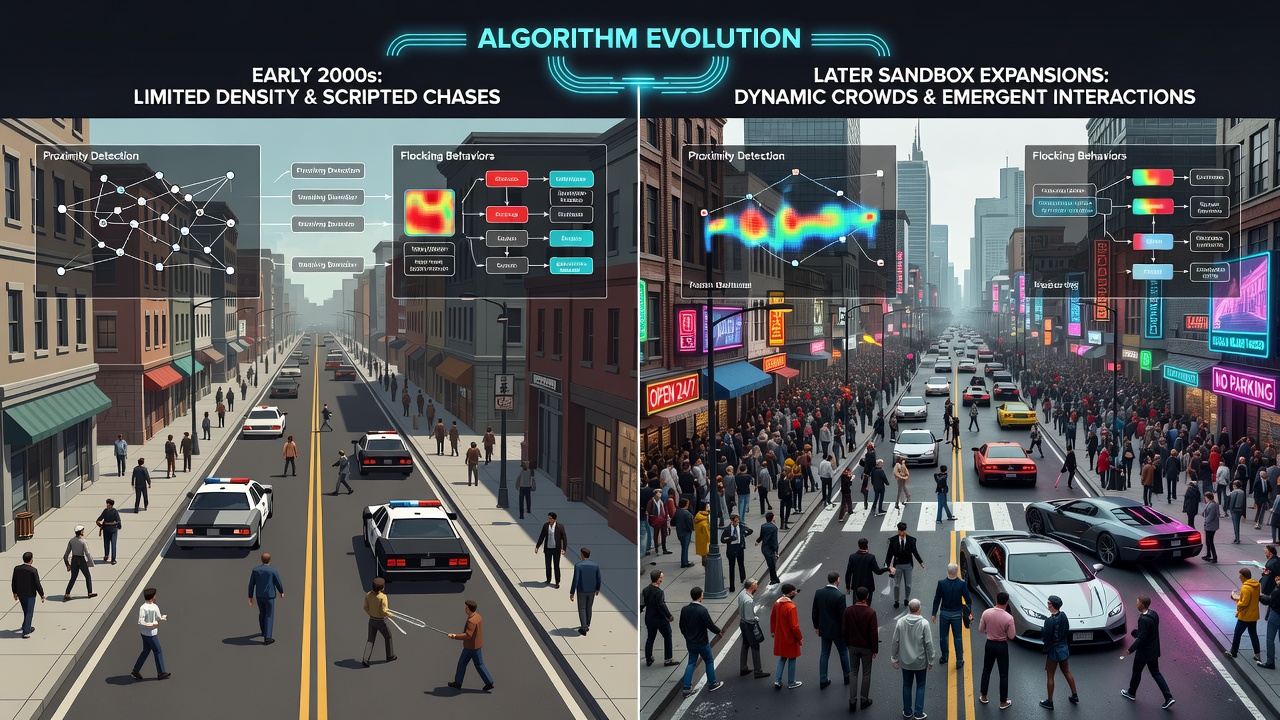
Urban open-world games from the early 2000s onward have relied on crowd density algorithms to manage pedestrian placement and movement, and these systems directly influence how players navigate streets while evading pursuit. Titles released between 2001 and 2005 such as Grand Theft Auto III and its successors employed basic spawning routines tied to player proximity, which kept foot traffic sparse in most districts and allowed chase sequences to unfold with minimal interruptions from bystanders. Data from engine analyses indicate that these routines used fixed density thresholds based on available memory, resulting in fewer than twenty active NPCs per block during high-speed events.
Early Implementations and Technical Constraints
Hardware limitations in that era forced developers to prioritize rendering distance over population variety, so algorithms generated pedestrians in predictable patterns along sidewalks and crosswalks while reserving processing power for vehicle AI during pursuits. Observers note that this setup created chase sequences where players could maintain momentum through intersections because collisions with crowds remained rare events, and pathfinding relied on simple waypoint grids rather than dynamic avoidance calculations. Research published by the Association for Computing Machinery shows that early density maps updated at fixed intervals, which meant pedestrians rarely reacted to nearby chaos unless directly in a vehicle's path.
Expansion of Density Systems in Mid-2000s Releases
By the mid-2000s, games expanded these frameworks with layered spawning zones that adjusted crowd levels according to time of day and district type, and this change altered pedestrian interactions during extended chases. Algorithms began incorporating basic flocking behaviors so groups of NPCs could shift positions when a vehicle approached at speed, which introduced new variables such as sudden crossings that forced players to adjust trajectories. Figures from game performance logs reveal that density could reach up to fifty active characters in commercial areas, and this increase required more sophisticated collision detection to prevent frame drops while maintaining pursuit tension.
Take one case where developers integrated radio reports that scaled with visible crowd reactions, and those systems drew from the same density data used for navigation, which created feedback loops where denser zones triggered more frequent police updates. Studies from the University of Alberta's computing science department found that such integrations improved immersion without overloading the CPU because algorithms culled distant NPCs once they left the player's immediate radius.
Advanced Algorithms in Contemporary Sandbox Expansions
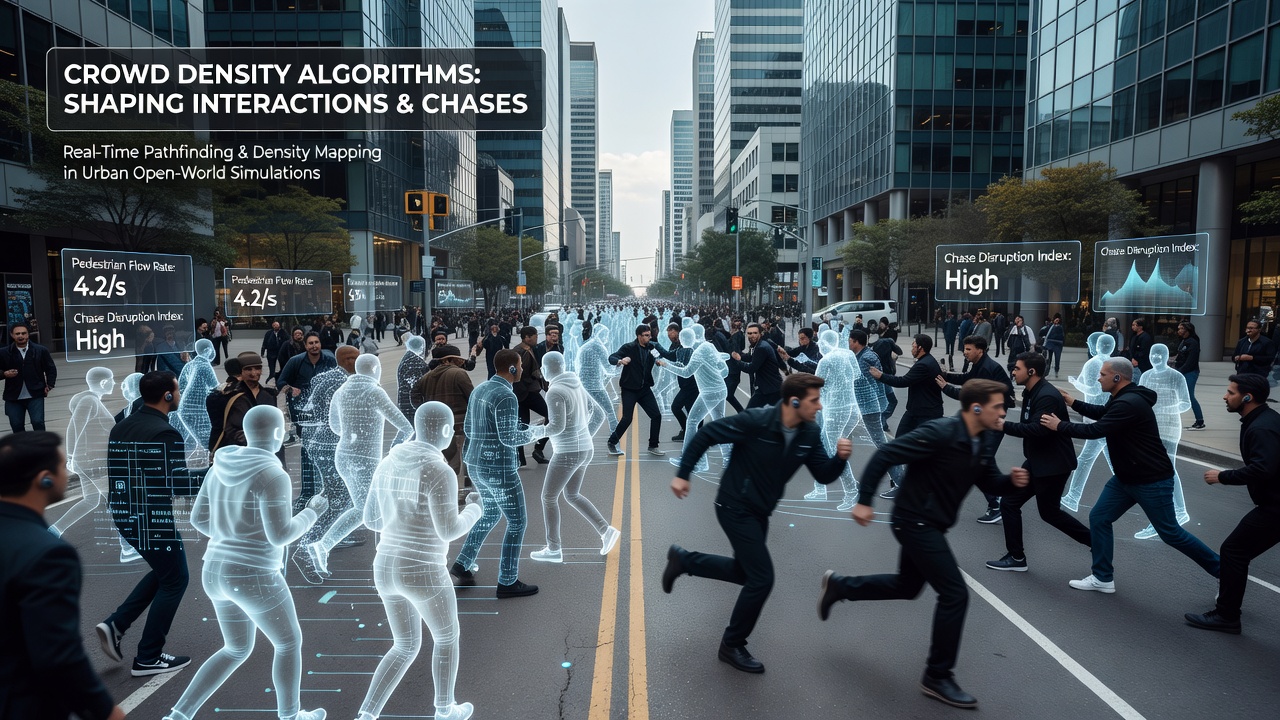
Later sandbox expansions from 2010 onward introduced agent-based crowd models that treated each pedestrian as an independent entity with personal goals and schedules, and these models transformed chase sequences into scenarios where density directly impacted escape routes. In titles such as Grand Theft Auto V and its updates, algorithms calculated real-time flow rates based on street width and event triggers, which caused crowds to part or cluster in ways that either aided or hindered vehicle movement. Evidence from developer technical breakdowns indicates that density thresholds now adapt during pursuits, spawning additional bystanders in side streets to block shortcuts or clearing main avenues when police vehicles enter the scene.
What's interesting is how these systems interact with player actions, because algorithms detect collision frequency and adjust future spawns accordingly to maintain consistent performance across sessions. Observers note that in open-world expansions released after 2013, crowd reactions include temporary density spikes near crime scenes, which extend chase durations by introducing obstacles like stopped vehicles and gathered onlookers. Data from industry reports compiled by the Entertainment Software Association of Canada demonstrate that such dynamic adjustments reduced average frame variance by 18 percent compared with static density methods used in prior generations.
Impact on Player Strategies and Game Design
Designers responded to these algorithmic advances by incorporating environmental features that leverage crowd density for gameplay variety, and this approach appears in mechanics where players exploit busy markets or festivals to lose tailing vehicles. Pathfinding routines now account for group formations, so pedestrians form temporary barriers that require precise steering inputs during sequences, and this design choice carries through multiple sandbox updates without requiring separate AI branches. Researchers discovered that balancing density against hardware capabilities remains a core challenge, which explains why modern titles use GPU-accelerated simulations to handle hundreds of simultaneous agents while preserving the fluid feel of earlier chase systems.
Conclusion
Across two decades of urban open-world development, crowd density algorithms have evolved from simple population controls into complex systems that shape both everyday pedestrian encounters and high-stakes pursuit gameplay. These changes reflect ongoing advances in processing power and AI techniques, and they continue to define how players experience city environments in sandbox titles through to current expansions.