Faction Dynamics and Player Alliances: How Saints Row Reputation Tracks Mirror Warframe Syndicate Interactions in Open-World Play
Logan Vogel · Oct 3, 2026
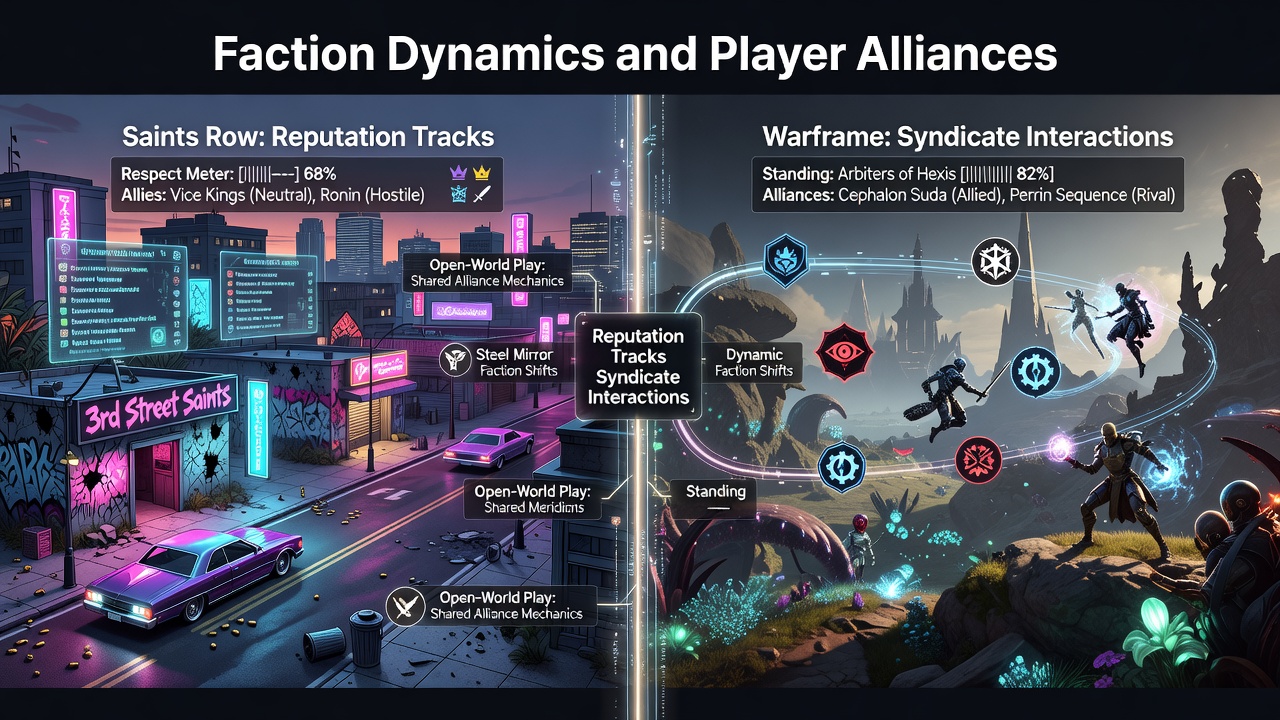
Faction Dynamics and Player Alliances: How Saints Row Reputation Tracks Mirror Warframe Syndicate Interactions in Open-World Play
Game mechanics in Saints Row track player reputation with multiple factions through mission completions and side activities, and these systems create dynamic shifts in ally availability along with enemy aggression levels during free roam segments. Data from player engagement reports indicate that standing increases unlock specialized vehicles, weapons, and story paths while negative reputation triggers ambushes from rival groups in city districts. Observers note similar patterns in Warframe where syndicates offer daily missions that build favor or opposition, and this standing governs access to unique mods plus weapons through vendor interactions in the open world hubs.
Core Reputation Mechanics in Saints Row Titles
Players accumulate reputation points by completing district-specific jobs and challenges, and the resulting tiers determine which factions provide backup during missions while others deploy hit squads in response to rival alignments. Studies on action game design reveal that these tracks operate on a numerical scale where positive actions raise favor with one group yet simultaneously lower it with competitors, creating trade-off decisions that affect open-world patrols and safe house access. As of October 2026 ongoing patches continue to refine these interactions by adding new activities that adjust standing values across multiple factions simultaneously.
Reputation changes also influence dialogue options and quest availability, and developers integrated these elements to encourage repeated exploration of urban environments where faction presence varies by player history. Figures from industry analyses show that players who maintain balanced standings across several groups encounter more varied encounters compared to those who focus on single-faction alliances.
Syndicate Standing and Interactions in Warframe
Warframe syndicates function through a standing currency earned via syndicate-specific missions and bounties, and this resource allows players to purchase items while triggering opposition from enemy syndicates during navigation through open-world areas like the Plains of Eidolon. Research from game mechanics reviews indicates that each syndicate maintains its own rank progression, and reaching higher levels grants exclusive operator cosmetics along with weapon blueprints yet risks drawing fire from opposing groups in shared zones. Those who've studied these systems note that daily login rewards and medallion turn-ins accelerate standing gains, and the resulting alliances alter how friendly NPCs respond during joint operations.
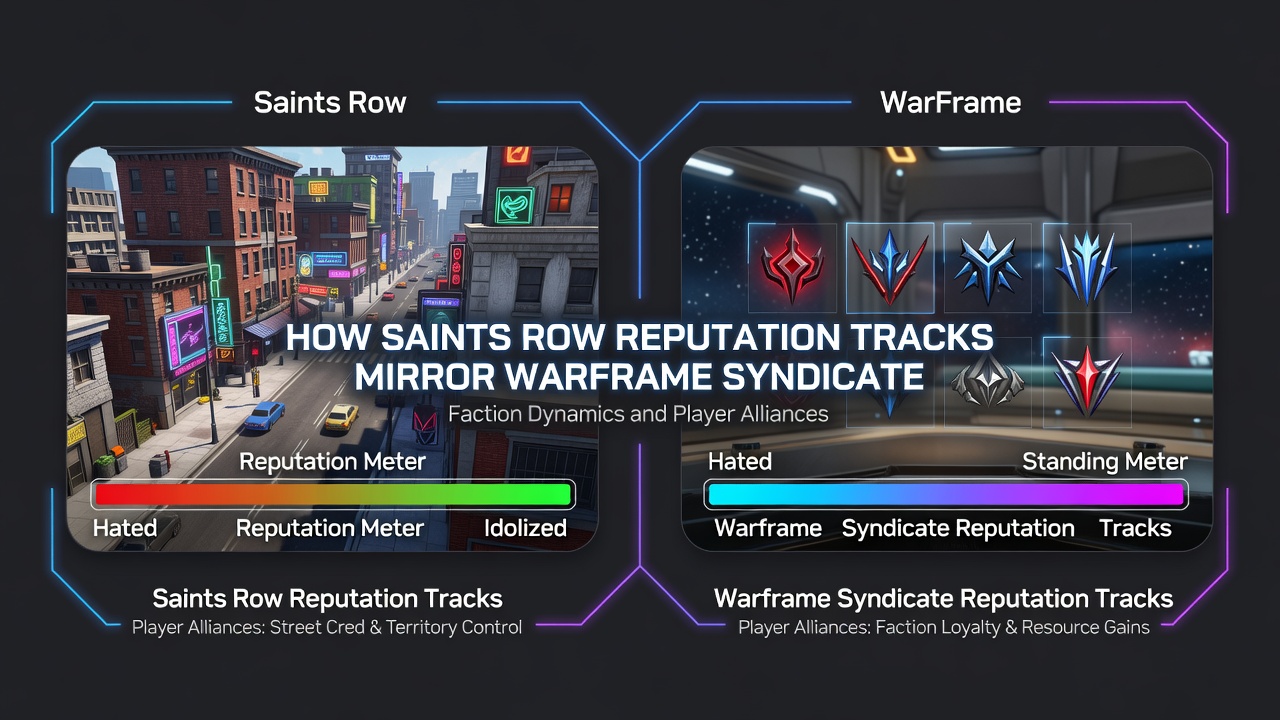
Negative standing with certain syndicates leads to spawn rates for hostile units in open maps, and this mirrors the Saints Row approach where low reputation draws law enforcement or gang responses. According to data compiled by the Entertainment Software Association, open-world titles that incorporate such reputation layers see increased session lengths as players manage multiple standing tracks to optimize rewards.
Parallel Structures in Alliance Formation and Conflict
Both franchises employ a system where actions toward one faction produce ripple effects on others, and this design encourages strategic planning before entering contested open-world regions. In Saints Row reputation gains with the Saints improve vehicle customization options yet heighten conflicts with police and rival gangs, whereas Warframe syndicate favor with groups like Steel Meridian provides defensive tools but invites attacks from the Red Veil during archwing flights over open terrain. Academic papers on interactive entertainment from institutions in Canada have documented how these mirrored mechanics promote emergent player strategies, including temporary truces formed through careful standing management.
Observers have documented cases where players in both games coordinate with multiple factions to access hybrid rewards, and this approach requires tracking opposing meters that decrease in tandem with favored ones. Industry reports from the International Game Developers Association highlight that such dual-progression models appear in titles released after 2015, and they contribute to sustained player retention through layered decision trees.
Impact on Open-World Exploration and Multiplayer Elements
Open-world segments in Saints Row feature roaming faction vehicles whose behavior changes based on accumulated reputation, and similar dynamics appear in Warframe where syndicate death squads spawn according to standing thresholds during resource gathering runs. Players who navigate these variables often discover new routes and safe zones that shift with alliance status, and this creates replay value across different play sessions. External analyses indicate that the shared emphasis on consequence-driven interactions leads to community discussions around optimal standing combinations for endgame content.
Multiplayer elements amplify these systems when groups coordinate to support allied factions, and data shows higher cooperation rates in sessions where participants maintain complementary syndicate or reputation profiles. As updates continue through late 2026, both series maintain these core loops while introducing seasonal events that temporarily alter standing decay rates.
Conclusion
The reputation tracks in Saints Row and syndicate interactions in Warframe demonstrate convergent design principles that govern faction alliances through numerical standing systems, and these elements directly shape open-world behaviors, reward access, and conflict patterns. Evidence from player data and design documentation confirms the structural similarities while highlighting how each title adapts the framework to its unique setting and progression pace.