Exploring Cinematic Storytelling Techniques Shared Between The Warriors and Later Rockstar Productions
Bianca Hartmann · Aug 18, 2026
Exploring Cinematic Storytelling Techniques Shared Between The Warriors and Later Rockstar Productions
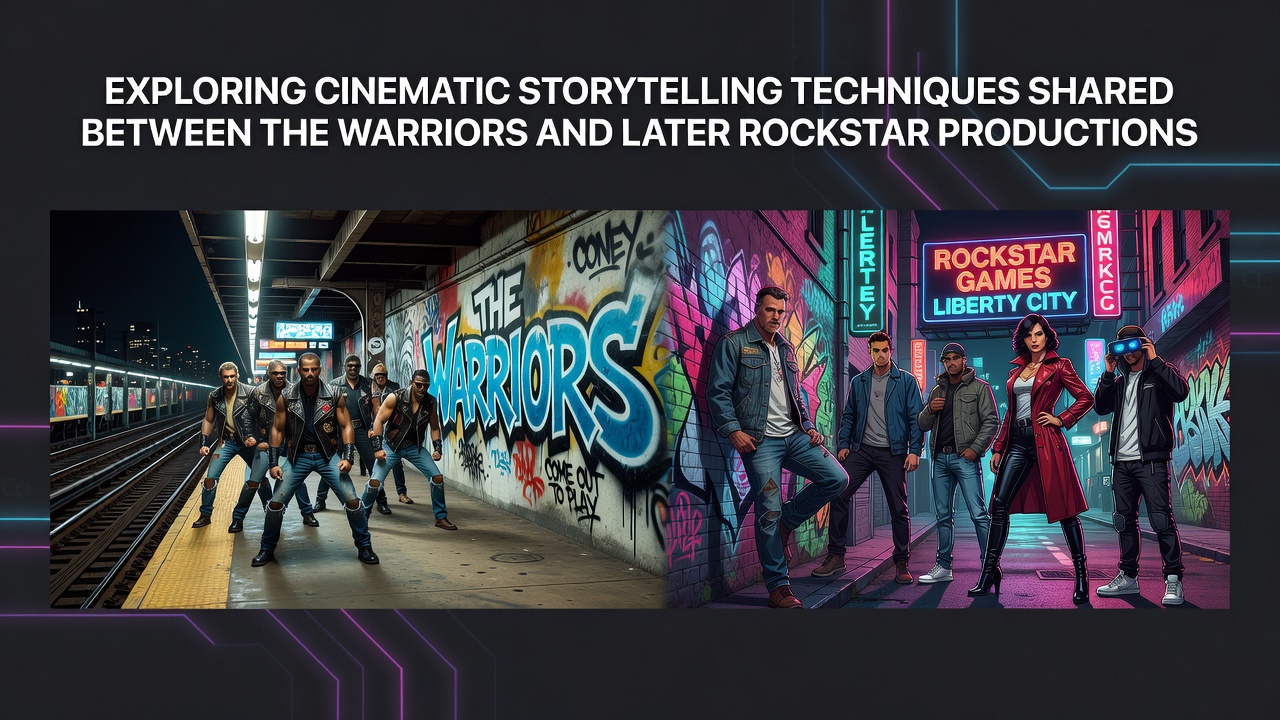
The 1979 film The Warriors directed by Walter Hill established a distinctive approach to urban narrative that later influenced several Rockstar productions including the Grand Theft Auto series and the 2005 video game adaptation of The Warriors itself. The movie follows a Coney Island gang making its way across New York City after a truce meeting turns deadly, and it structures the journey through discrete chapters separated by title cards that resemble comic book panels. Rockstar titles adopted similar episodic progression where players advance through distinct narrative segments while traversing large city environments.
Narrative Structure and Episodic Progression
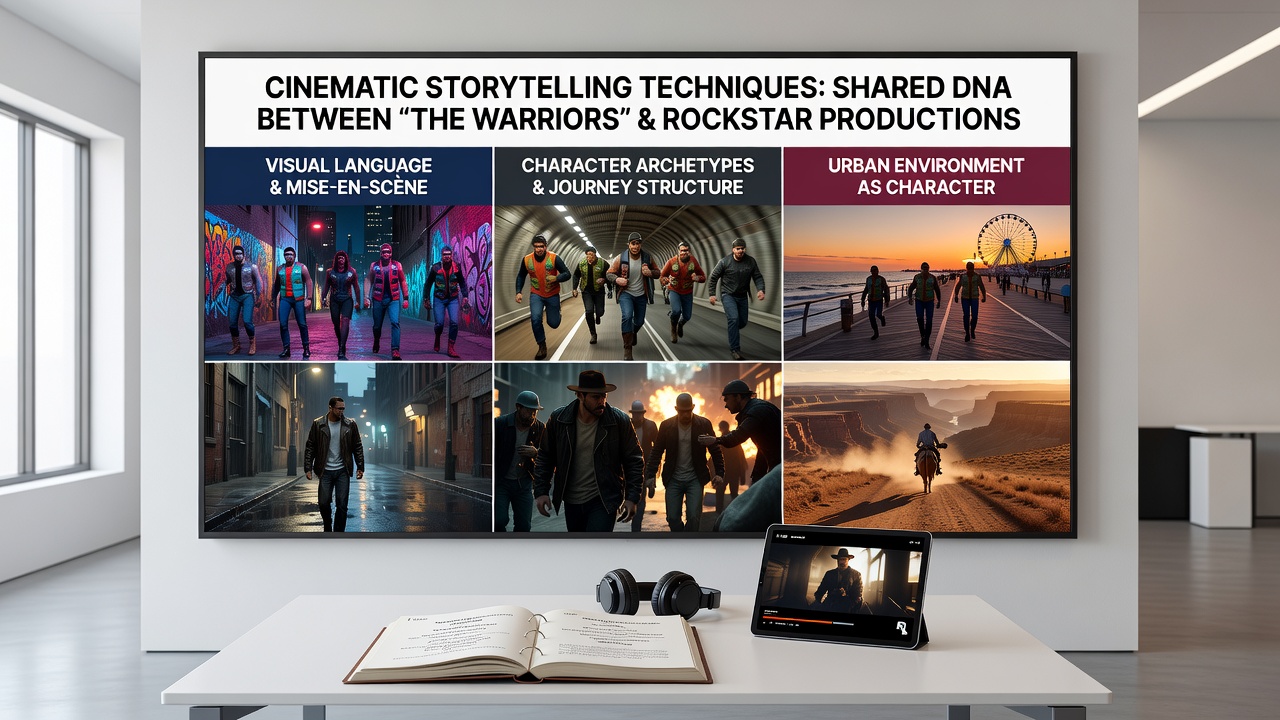
The Warriors divides its story into night-long segments that build tension through repeated encounters with rival groups, and this pattern appears in Rockstar games where missions unfold across multiple locations within a single in-game day or night cycle. Data from industry reports indicate that open-world action titles released after 2001 frequently employ chapter-based storytelling to maintain pacing across extended play sessions. Observers note how the film's use of a central quest through hostile territory mirrors the structure of Grand Theft Auto missions that send protagonists across sprawling maps while avoiding or confronting opposing factions.
Visual Styling and Urban Atmosphere
High-contrast lighting, saturated colors, and stylized set design define the film's look, and Rockstar carried comparable techniques into its in-game environments through dynamic lighting systems and detailed cityscapes. The Warriors presents New York as a series of distinct neighborhoods each with its own visual identity, while later Rockstar productions render varied districts that players explore at different times of day. Research from film preservation archives shows that Walter Hill drew on comic art and 1970s street photography, and those same influences surface in the graphic-novel style cutscenes that Rockstar has used since the release of Grand Theft Auto III.
Character Archetypes and Dialogue Patterns
Memorable gang members in The Warriors speak in rhythmic, almost theatrical lines that establish group identity, and Rockstar writers incorporated comparable dialogue rhythms into radio broadcasts and character banter. The film assigns each gang a unique costume and attitude that signals allegiance at a glance, and this approach reappears in Rockstar titles where faction members wear consistent clothing styles and deliver signature catchphrases. Studies conducted by media researchers at European universities have documented how such visual and verbal markers help players quickly parse complex social hierarchies within open-world settings.
Sound design plays a central role in both works. The Warriors features a memorable score by Barry De Vorzon that underscores movement through the city, and Rockstar integrated licensed tracks and original scores that shift according to location and time of day. According to records from the Academy of Motion Picture Arts and Sciences, the film's soundtrack helped define mood without traditional orchestration, and Rockstar later applied similar principles when selecting music that reinforces the atmosphere of each neighborhood.
Adaptation and Direct Influence
Rockstar released its own adaptation of The Warriors in 2005 for multiple platforms, and that title translated the film's chapter structure and combat encounters into interactive form. The game retains the original dialogue and visual motifs while expanding exploration opportunities, demonstrating a direct transfer of cinematic techniques into gameplay systems. Industry analyses published by North American trade organizations highlight how such adaptations allow developers to test narrative methods first established on screen within branching player-driven contexts.
Legacy Across Subsequent Titles
Red Dead Redemption and its sequel extend the same principles of long-form travel, faction conflict, and episodic mission design that originated in The Warriors and matured through Rockstar's urban titles. Characters navigate hostile regions while managing shifting alliances, and the games employ title cards and chapter divisions that echo the comic-book framing of the 1979 film. As of August 2026, retrospective screenings and academic panels continue to examine these connections between classic cinema and contemporary game storytelling.
Conclusion
The shared techniques between The Warriors and later Rockstar productions include episodic structure, stylized urban visuals, distinctive character presentation, and integrated sound design. These elements moved from film to interactive media through deliberate adaptation choices, and they remain visible across multiple Rockstar releases. External documentation from film and game studies sources confirms the persistence of these methods in both narrative construction and player experience.